Article: The Sound of Connection
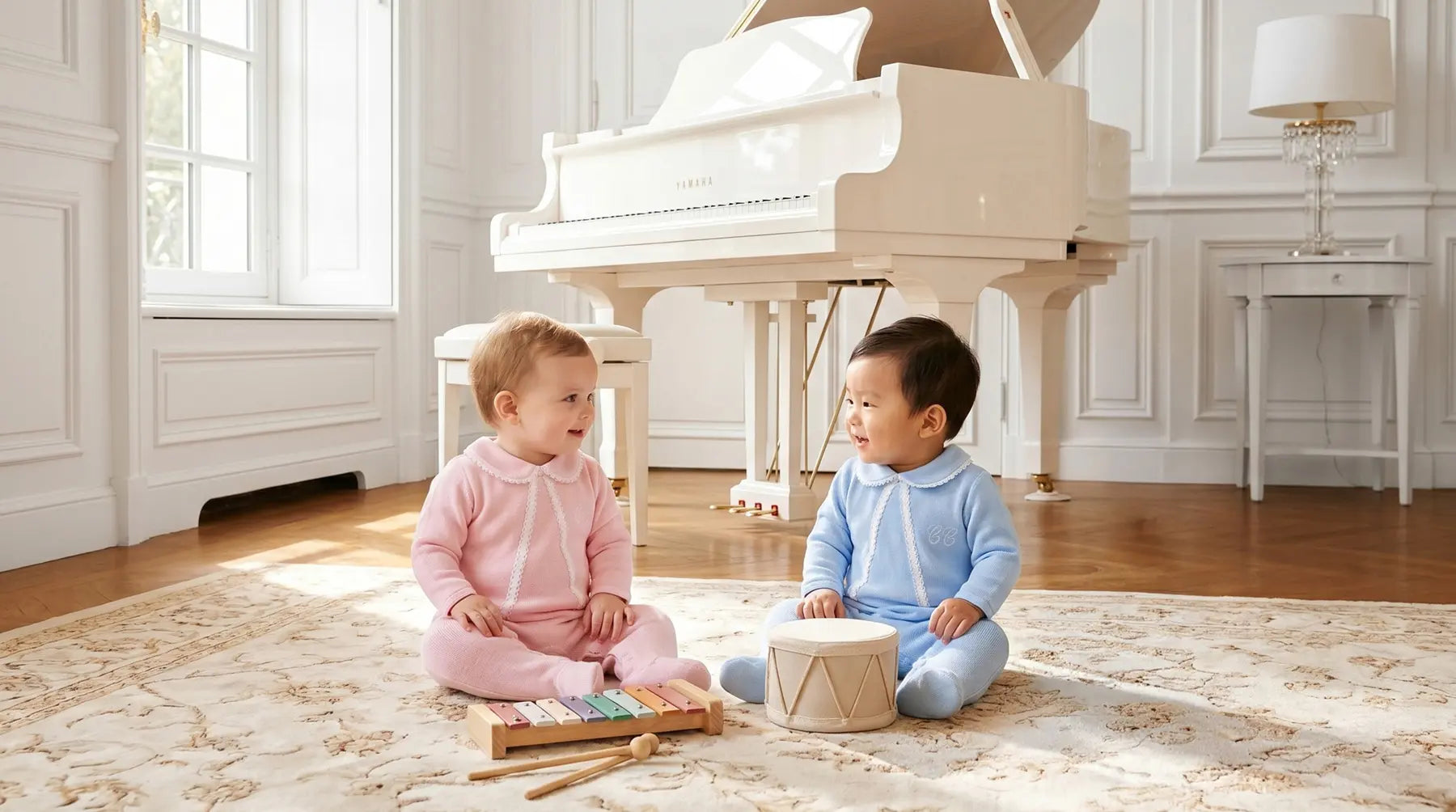
The Sound of Connection
How Music Shapes a Baby’s Earliest Experience of the World
At Chéris Chic, we believe childhood is shaped through the quiet rituals that surround everyday life: a lullaby before sleep, the familiarity of a parent’s voice, the softness of natural fabrics against delicate skin, music drifting through the home at dusk.

Long before language develops, babies experience the world through sensation: rhythm, movement, touch, warmth, and sound. To explore the relationship between music and early development, we spoke with Ruth Hopkins (an Oxford-trained musicologist, solo soprano, and Artistic Director of the K'antu Ensemble) about why music becomes one of a child’s first emotional languages.


“Children Respond to Music Before They Understand Words”
CC: What first drew you to the way babies experience sound?
RH: Music always felt instinctive to me. As a child, it was never simply something to study or perfect — it was a form of play, curiosity, and connection.
That is what fascinates me about how young children respond to music. Babies engage with sound naturally and without self-consciousness. They respond to rhythm, repetition, tone, and atmosphere long before they fully understand language itself.
Research in early childhood development suggests that babies begin recognising patterns in sound remarkably early. Music engages emotional, sensory, auditory, and motor pathways simultaneously, making it one of the most immersive experiences a child can have.
The Relationship Between Music and Emotional Security
CC: What is happening during those early sensory experiences?
RH: Young children do not separate sound, movement, touch, and emotion in the way adults often do — they experience everything as one connected environment.
A familiar lullaby, the rhythm of a parent’s voice, or even the atmosphere created through gentle sound can become deeply associated with comfort and security. Babies often experience rhythm physically before they understand it intellectually.
What matters most is not perfection or musical training, but presence. Children respond most strongly to warmth, familiarity, and shared attention.

Everyday Rituals That Stay With Children
For parents, creating a musical environment at home rarely needs to be elaborate. The smallest rituals are often the most meaningful.
- Sing During Ordinary Moments
Music woven into daily routines — bath time, getting dressed, evening walks — creates familiarity and emotional consistency.
- Create Rhythm Through Play
Clapping patterns, dancing in the kitchen, or tapping gently on household objects helps children experience rhythm physically and joyfully.
- Return to the Same Lullaby
Repetition creates emotional anchoring. A familiar song at bedtime can become part of a child’s sense of calm, safety, and routine for years to come.

“Children Remember How Something Felt”
CC: How does shared music strengthen the connection between parent and child?
RH: Music encourages people to slow down and become fully present with one another. There is something uniquely intimate about singing to a child or sharing music together because it creates connection without pressure or performance.
Years later, children may not remember every detail of those early days, but they often remember the feeling associated with them — warmth, comfort, safety, and love.
A Final Reflection
CC: What would you most want parents to remember during the early years?
RH: Children grow quickly, and many of the moments that shape them most deeply appear very small at the time.
You do not need to create perfect experiences. What children remember is feeling loved, encouraged, listened to, and emotionally safe. If music becomes part of that environment, even in simple ways, it can stay with them for a lifetime.
About Ruth Hopkins

Ruth Hopkins is an Oxford educated musicologist, solo soprano, and Artistic Director of the K'antu Ensemble. Her work explores the relationship between music, sensory experience, and emotional development in early childhood, with a particular interest in how sound shapes connection, memory, and learning during the earliest years of life.
Learn more about Ruth Hopkins’ work here.
_____________________________________________
At Chéris Chic, we believe true luxury lies not in excess, but in attention — in the textures, rituals, and moments that quietly shape a child’s earliest experience of the world.
Wrap their earliest moments in uncompromised comfort. Discover the collection.